Illustration Library
CASE STUDY Redwood Design System, Illustration
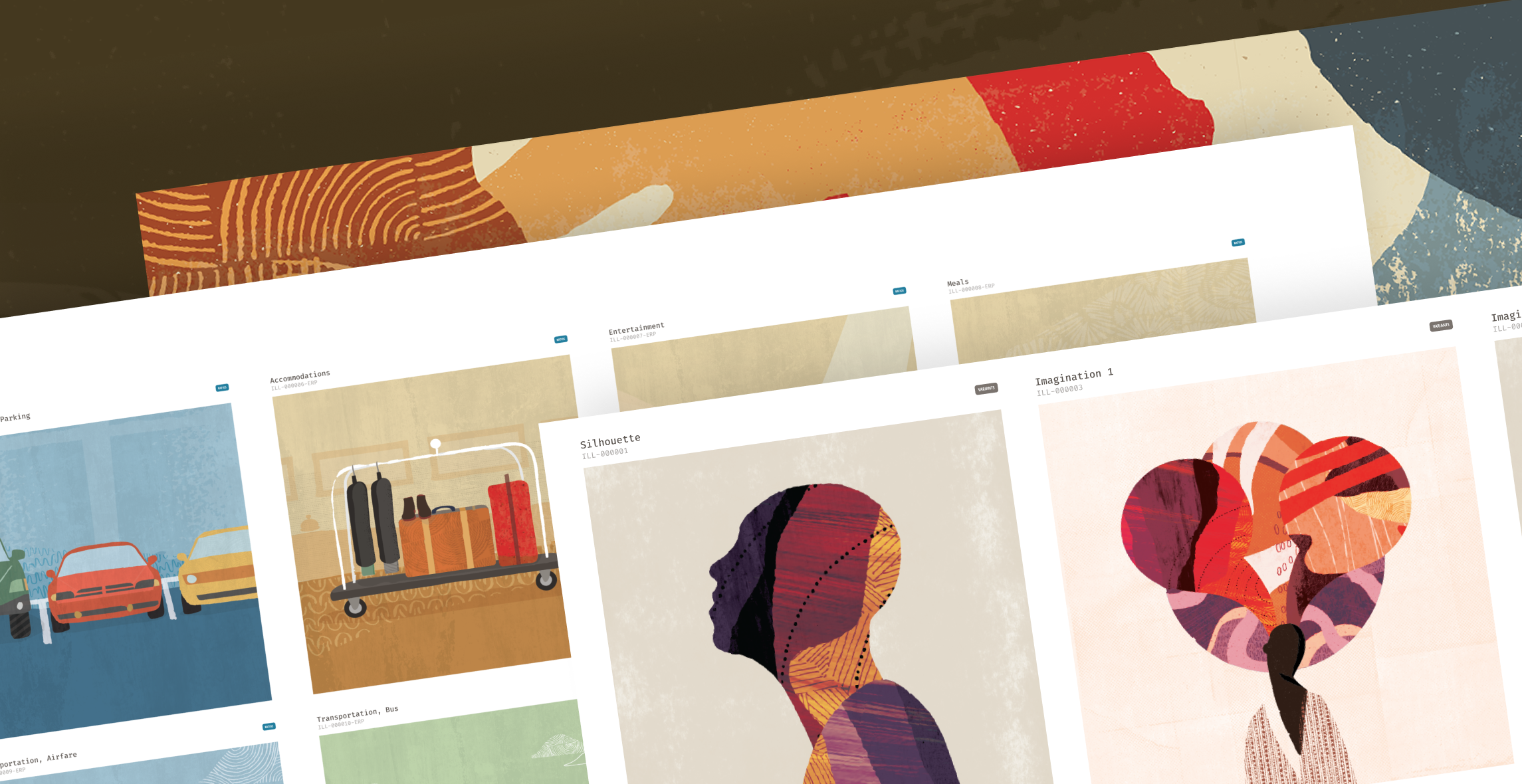
Increase awareness of valuable resources while providing an easier way to access and utilize illustrations.
THE ASK
The collection of illustration resources is quickly expanding, but the majority of employees cannot benefit from them. Creative teams are either unaware that the illustrations exist, or availability is splintered throughout multiple locations across many individual teams. There is no documented process or single location to access them, leaving an increasing need for one centralized point of entry.
PROBLEM
The entire UX organization uses Figma on a daily basis for designing and prototyping. Creating a centralized library within their primary work environment reduced the need to look elsewhere for illustrations, streamlining the integration of assets for immediate use within designs. Increased visibility into the breadth of the illustration collection provided greater diversity, representation, and visibility across both internal and customer-facing applications.
SOLUTION
Requirements
As a result of silo’d efforts, multiple parallel but separate collections, and lack of central communication channels, one single repository of illustration resources needed to be created that featured an easy path to access and locate relevant imagery.
The discovery process was broken into six distinct stages identifying all existing paths one could take to obtain illustrations, contacting each team and bringing them all into one conversation. Performing a comprehensive assessment of all collected resources informed the creation of one single curated library – with the goal of more easily accommodating the UX Design Organization, as well as Oracle’s product, marketing, environment and exhibition needs. Lastly, we needed to formulate processes that defined one targeted directive and singular destination.
DISCOVERY PROCESS
Variants were included within every component supporting multiple ratios and variants.
By maximizing the capabilities of Figma, we were able to embed multiple images into a single component – allowing us to minimize the number of assets needed to be exported, keeping the library cleaner and simplifying the handoff process between design and development.
An additional key benefit to this approach insured proper usage of the illustrations, maintaining the integrity of the visual design system.
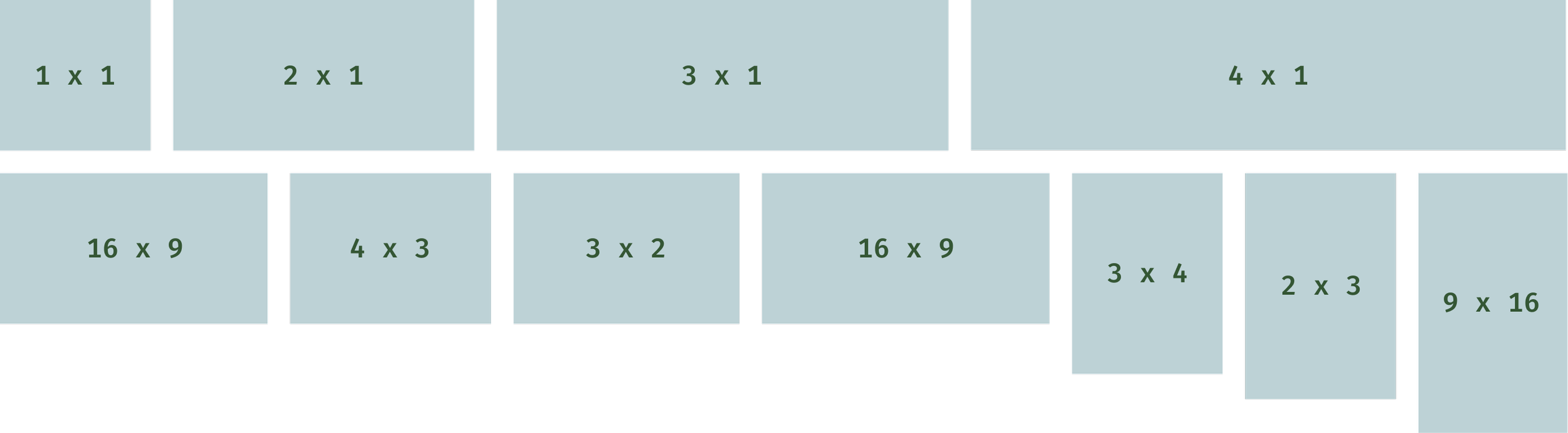
Expanded options–Insuring consistency through variation.
CUSTOMIZING THE EXPERIENCE TO TELL THE MOST EFFECTIVE STORY
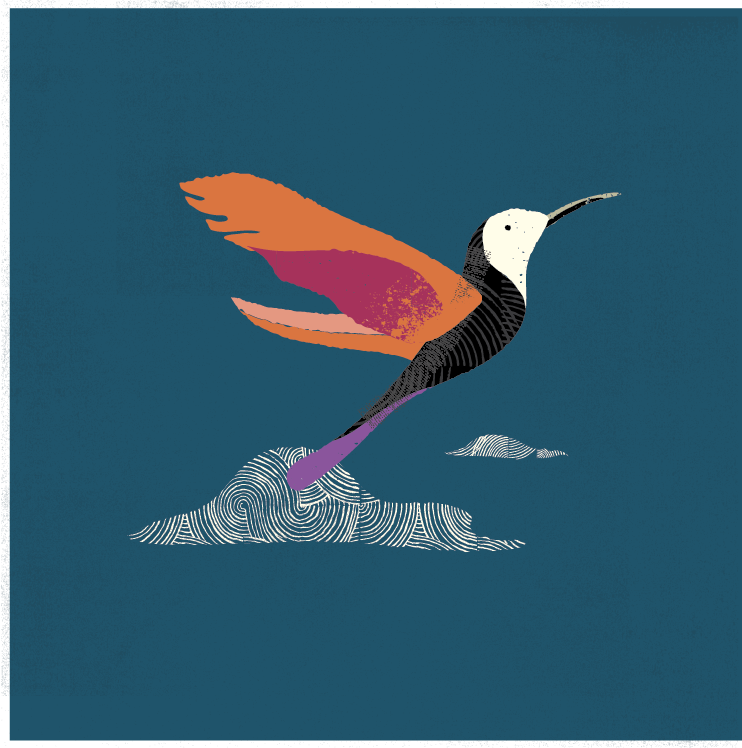
For a number of designated illustrations, you can also choose from multiple variations – including color, abstract texture or data texture. You can also choose from preset ratios, to make sure the illustration fits the exact placement in your product UI, cards or presentation.
Easier to find what you need–when you need it.
The creation of a new comprehensive cataloging system, allowed for easy identification and searchable assets. We added a visual reference to let the user know if this was a singular image or had additional ratios or variants–providing more options for a specific illustration. Embedded in each illustration components are potentially multiple images at varying ratios, to ensure that you are not only using the right image for your needs, but also provide guardrails to ensure that the integrity of the design system was maintained. When additional variations are available, one could access illustrations with the same visual concept and composition, while featuring a different color palette, varying texture or even different people or objects featured.
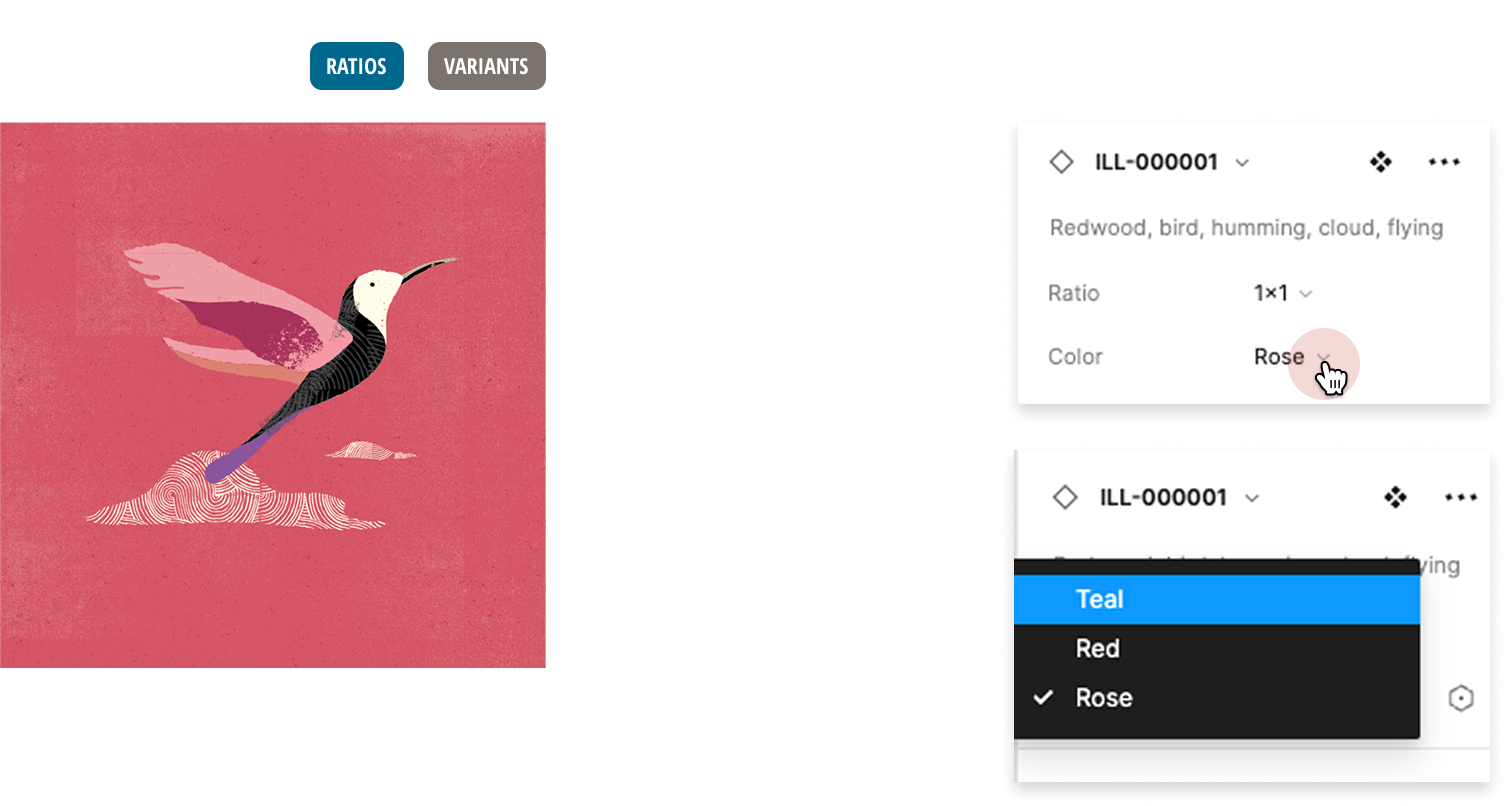
ORIGINAL ILLUSTRATION WITH COLOR VARIANTS EMBEDDED INTO THE COMPONENT


Thinking Abstractly, Organizing with intent.
In addition to the conceptual illustrations, the Redwood Illustration Library now offered access to all of the abstract art needed to create a rich and unique experience.
Cataloging all of the Redwood textures offered insight and visibility – across the company – creating opportunities to search and utilize resources that were previously only available to a limited few. As the system evolved, so did the library, enabling more people to find all of the resources Redwood offered, in presentations, product and promotional material, public exhibitions to internal Oracle office spaces.
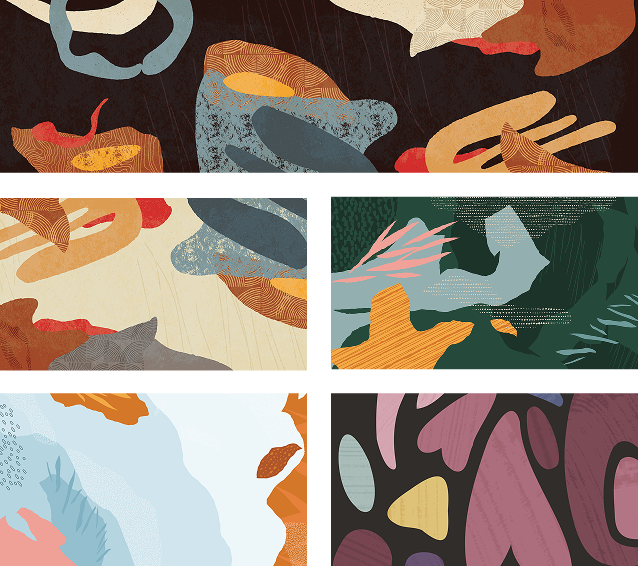
ABSTRACT TEXTURES AS PART OF THE NEWLY AVAILABLE ASSETS.
Product–Specific Families
Many illustrations are created as larger sets and were added as a feature of the library, increasing search results for similar product-based and subject-based images – previously only single images were offered. By including visual references to these “illustration families”, it increased usage of already created system assets – minimizing the valuable time and resources needed to create new Custom Illustrations Visibility into the full catalog insured consistency across prototypes, marketing campaigns and products. By offering individual objects, we were able to increase potential uses for each illustration.
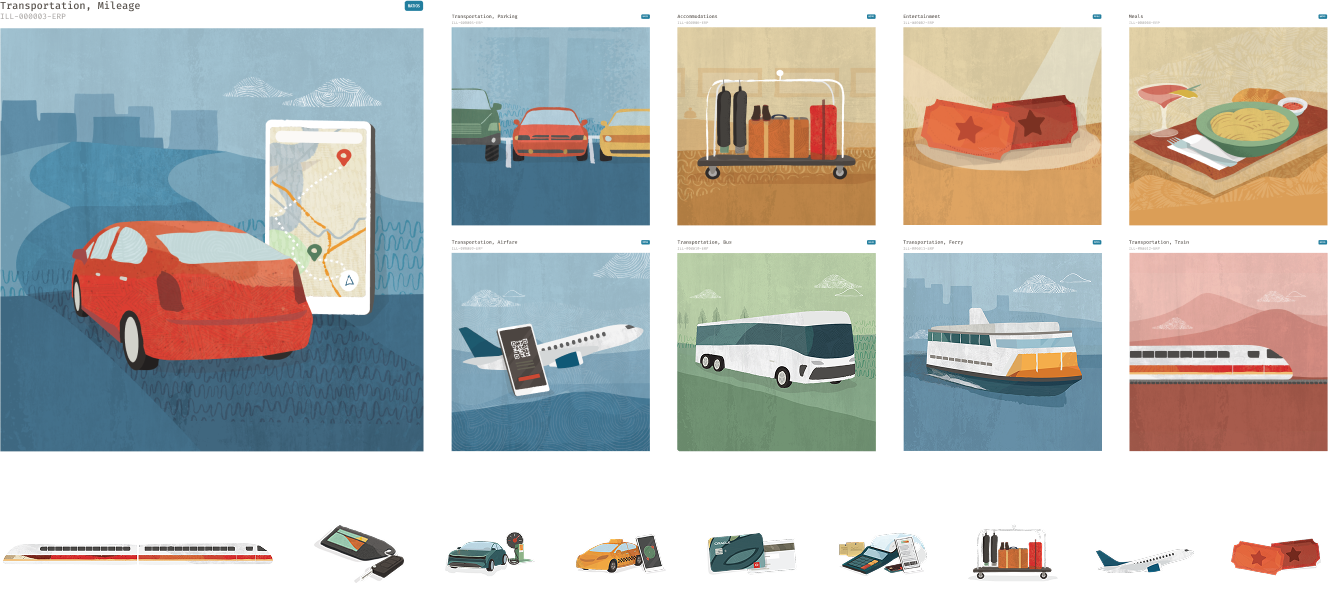
Contextual Usage
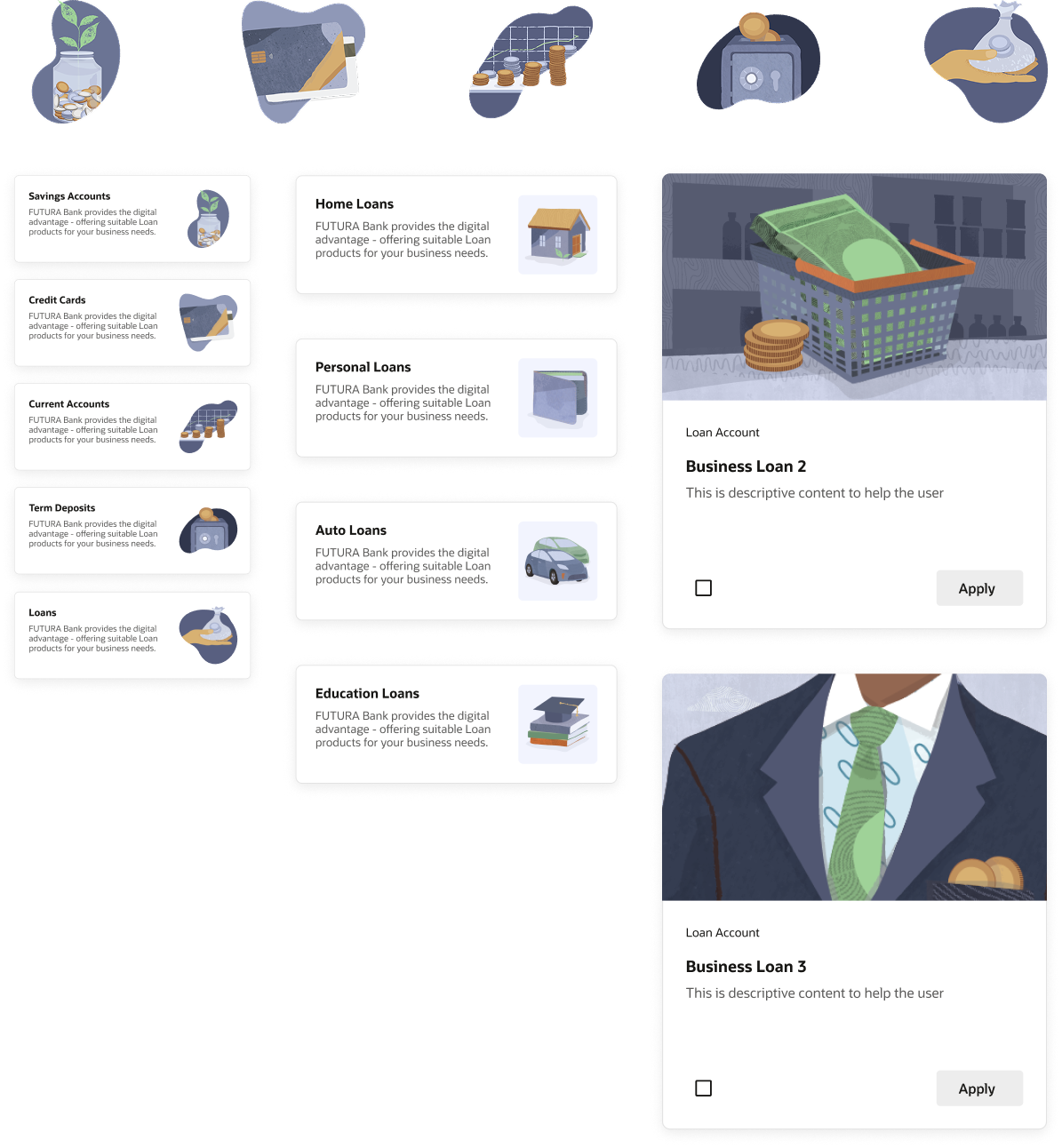
In many instances, the images are placed into the component to give designers and developers a preview of how the illustrations look contextually within the application.
RESULTS
Creating a singular, simple-to-use catalog provided creative teams greater visibility into Oracle’s illustration collection with access to over 1,000 unique illustrations.
Heightened search capabilities made locating crucial resources easier–saving time, providing frictionless collaboration among cross-functional teams increasing brand consistency and greater efficiency.